
Archery GB Classification System
A Definitive Guide to Target Archery Classifications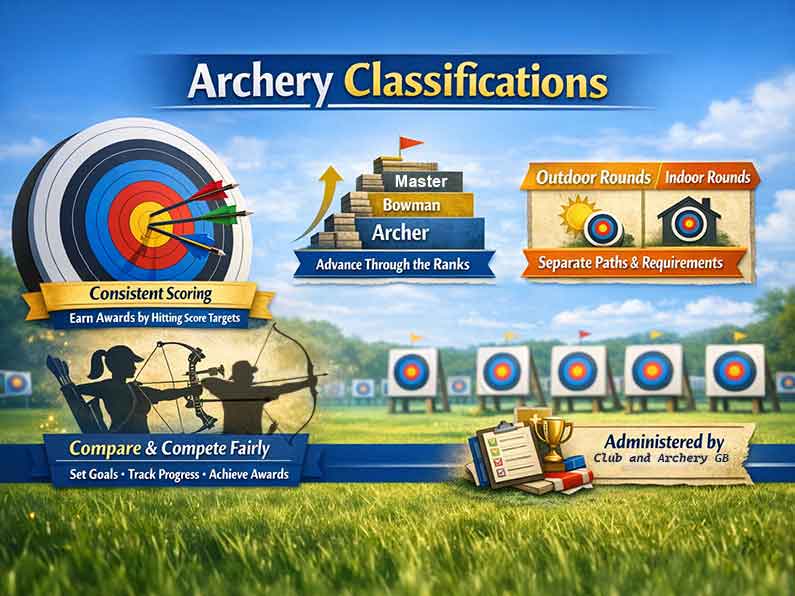
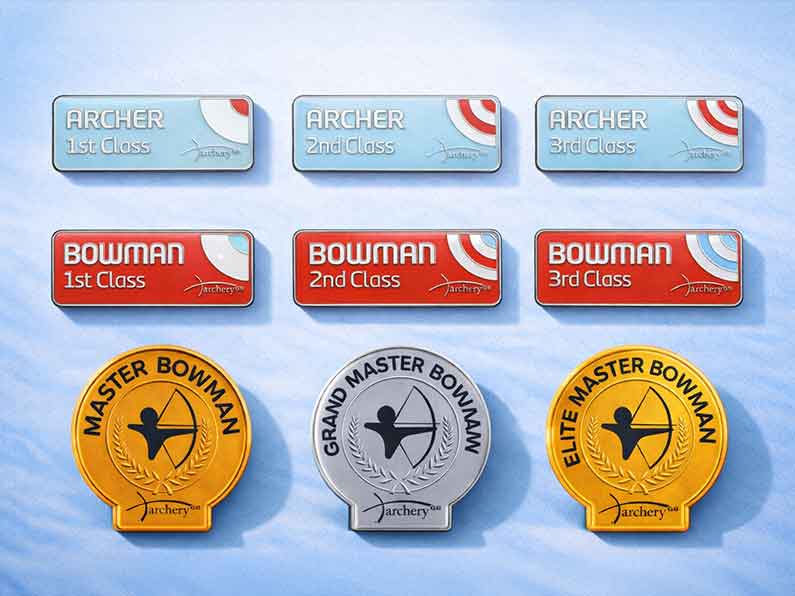
Classification progression from Archer to Master Bowman.
Understanding Archery GB Classifications
In archery, a classification is a formal recognition of an archer’s scoring ability across recognised rounds. Rather than reflecting a single performance, it demonstrates that an archer can consistently achieve specific scores over the number of arrows required for a given level. Classifications provide clear milestones for progression and a standardised benchmark for comparing performance within clubs and competitions.
Each classification is awarded based on meeting or exceeding score thresholds over a defined arrow count in recognised rounds. Indoor and outdoor classifications are completely independent, with separate tables, scoring requirements, and qualifying rounds. Unlike handicaps, which track precision and consistency numerically, classifications acknowledge achievement and skill by formally recognising that an archer has met the standard for a particular level.
By tracking classifications, archers gain a structured pathway of achievement, allowing them to set goals, monitor progress, and compete fairly with others at similar skill levels. Club records officers and Archery GB administer the awards, ensuring consistency and integrity in the recognition process.







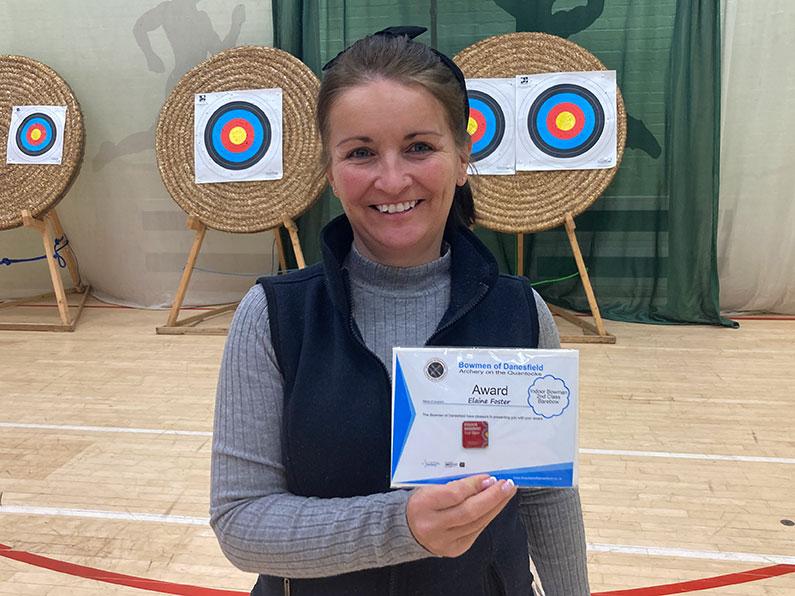

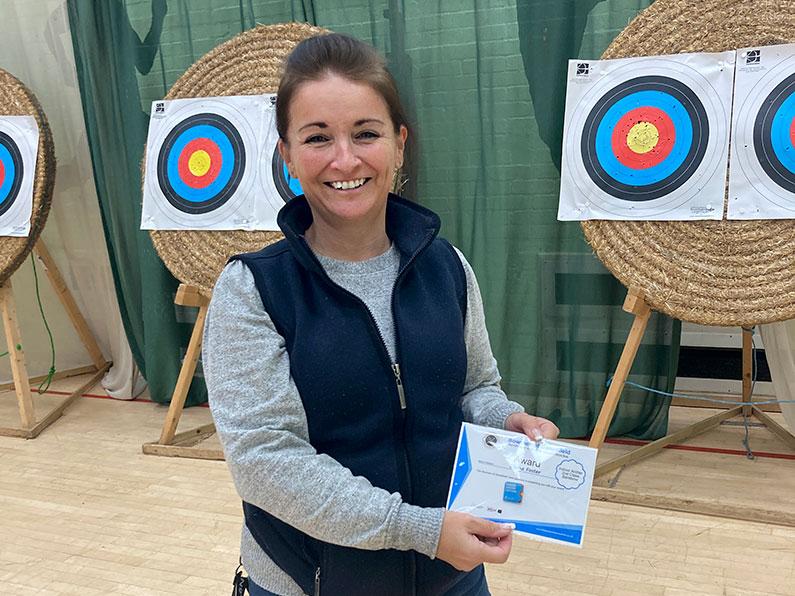

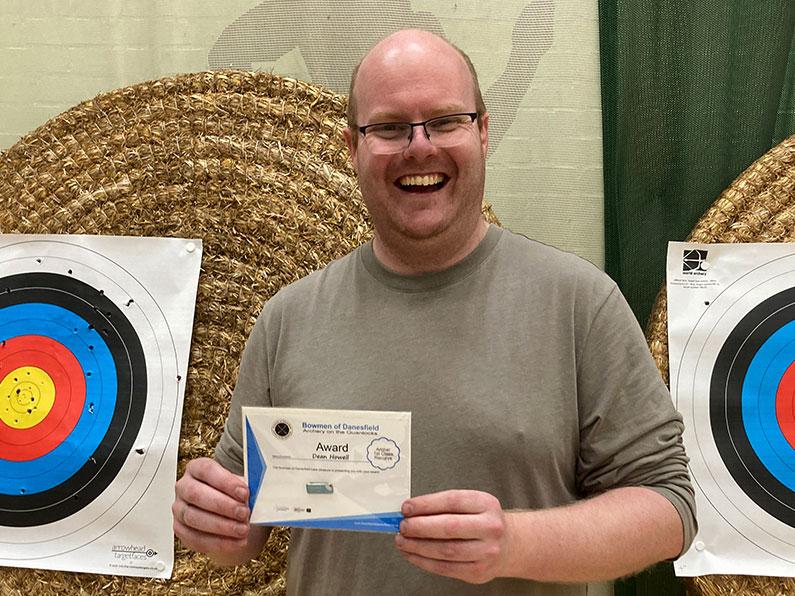
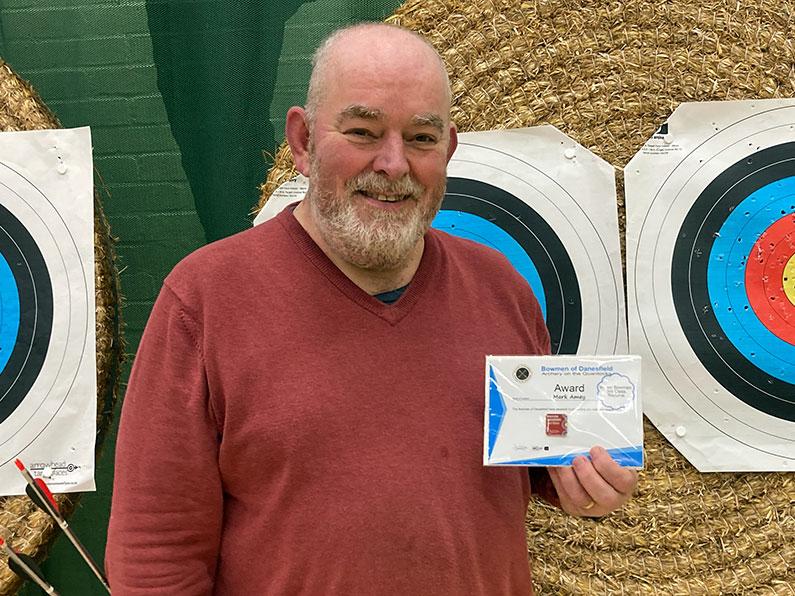






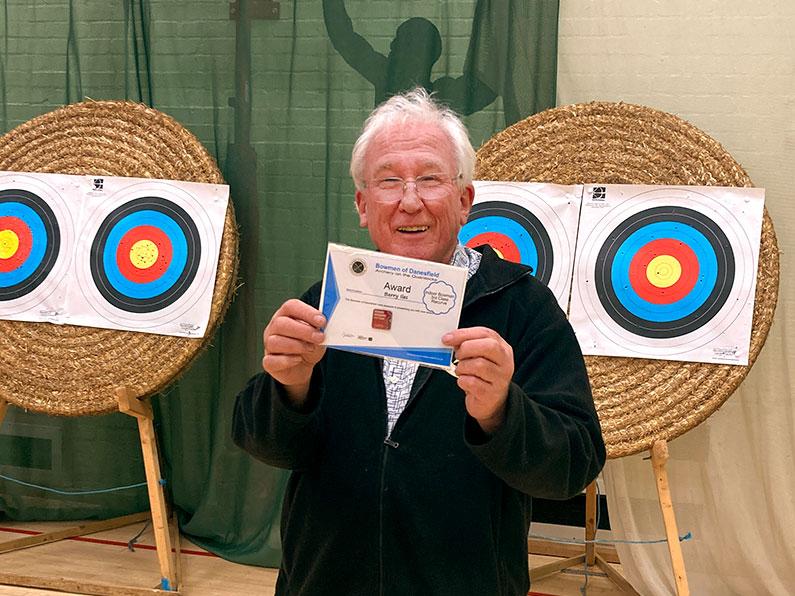


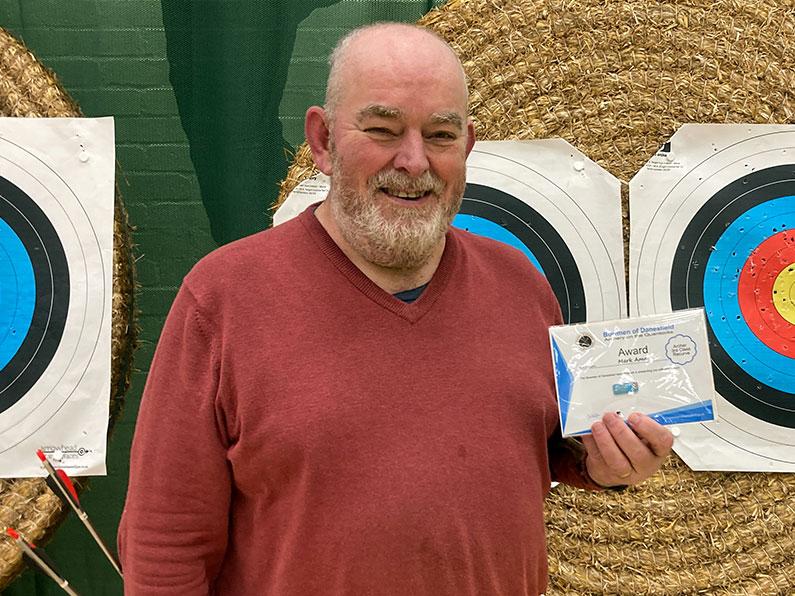


Bowmen of Danesfield Members with their Classification Badges
Early History of Archery Classifications
The use of classifications in archery developed as a practical way to recognise achievement and structure competition as the sport grew in popularity. In the early years, performance was often acknowledged informally through club awards, badges, or local score bands. These systems varied across clubs and regions, making it difficult to compare standards or consistently recognise achievement across the country.
As organised competition expanded, there was a growing need for a standardised framework to define performance levels clearly and consistently. Early classification schemes focused on fixed scoring benchmarks tied to recognised rounds, allowing archers to demonstrate competence at increasing levels of difficulty. This approach rewarded achievement without requiring ongoing recalculation or statistical modelling.
Over time, these early schemes became more formalised, providing a common reference point for clubs and competitions and helping archers understand where they stood within the wider archery community.
The Archery GB Classification System in an International Context
The Archery GB classification system is unusual internationally, as most governing bodies rely on rankings and competition outcomes rather than fixed achievement standards. Developed to support the UK’s strong club structure and participation-focused approach, it provides clear, nationally consistent milestones that recognise progress from beginner to elite level. While distinct from international ranking systems, it complements them by offering a structured pathway of development and recognition within domestic archery.
Evolution to the Modern System
The modern Archery GB classification system builds on these early foundations while refining them for consistency, fairness, and national administration. Classification levels were clearly defined, tiered structures were introduced, and requirements for arrow counts and recognised rounds were standardised.
As competition standards increased, higher-level classifications, such as Bowman and Master Bowman, were added to recognise exceptional performance. Record Status requirements were introduced for the highest tiers to ensure that top classifications reflected performance under fully controlled competitive conditions.
Indoor and outdoor classifications were separated to account for the very different demands of each discipline, with independent tables and qualifying criteria. Today, the system provides a clear progression pathway from beginner levels through to elite achievement, administered consistently by Club Records Officers and Archery GB.
While the system has evolved, its purpose has remained the same: to provide clear recognition of achievement, support fair competition, and offer archers meaningful goals throughout their development.
What the Classification System Is
The Archery GB classification system is a structured framework designed to recognise and reward an archer’s scoring ability across recognised qualifying rounds. Rather than reflecting a single good performance, a classification confirms that an archer can consistently achieve a defined scoring standard over a specified number of arrows.
Each classification level is earned by meeting or exceeding published score thresholds using recognised rounds and arrow counts. These thresholds are set to reflect meaningful stages of development, from early progress through to elite competitive performance. Once achieved, a classification acts as formal recognition that the archer has demonstrated the skill, consistency, and accuracy required for that level.
Classifications serve several important purposes within archery:
-
They provide clear milestones that help archers set goals and measure improvement over time
-
They allow meaningful comparison of performance within defined skill levels
-
They support fair competition by grouping archers of broadly similar standard
Indoor and outdoor classifications are completely independent systems. Each has its own tables, qualifying rounds, arrow requirements, and seasonal structure. Performance indoors does not influence outdoor classification, and vice versa.
Unlike handicaps, which numerically track precision and consistency across all rounds, classifications acknowledge achievement. They mark the point at which an archer has met a recognised standard and provide a structured pathway through the sport, administered by Club Records Officers and Archery GB to ensure consistency and integrity.

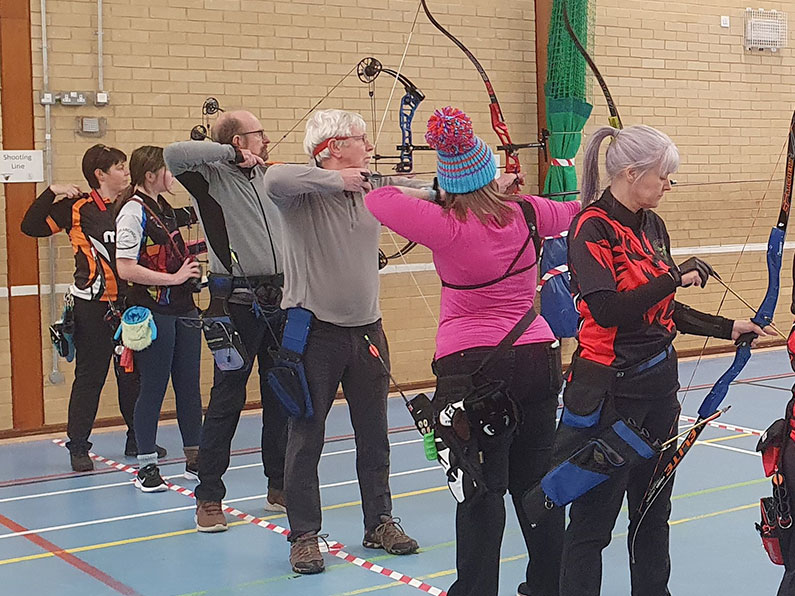
Separate Outdoor and Indoor Classifications
There are two distinct systems:
- Outdoor archery: 9 classification levels
- Indoor archery: 8 classification levels
These classifications are grouped into three tiers: Archer, Bowman, and Master Bowman.
Scores required for each classification depend on the archer’s bow style, age group, and gender, with official details published in the Archery GB classification tables.

Outdoor Classifications
The outdoor system follows a hierarchical structure.
Archer Tier: 3rd Class → 2nd Class → 1st Class
Bowman Tier: 3rd Bowman → 2nd Bowman → 1st Bowman
Master Bowman Tier: Master Bowman → Grand Master Bowman → Elite Master Bowman
Key points
The top three classifications in the Master Bowman tier require Record Status competitions.
To earn an Archer tier award, archers must shoot a total of 144 arrows (12 dozen) across recognised rounds.
Rounds can be combined as long as each meets the minimum qualifying score for that classification.
Progression into the Bowman tier requires more challenging rounds and higher scores, reflecting increased skill.
Master Bowman titles showcase exceptional ability and are only awarded by Archery GB through Record Status submissions.
Outdoor Classification Table (Summary)
| Tier | Levels | Arrows Required | Events | Administered By |
| Archer | 3rd Class → 1st Class | 12 dozen (144 arrows) | Recognised rounds including club shoots | Club Records Officer |
| Bowman | 3rd Bowman → 1st Bowman | 18 dozen (216 arrows) | Competitive events (club or open tournaments) | Club Records Officer |
| Master Bowman | Master → Grand Master → Elite Master | 36 dozen (432 arrows) | Record Status competitions (UKRS or WRS) | Archery GB |
Archer Tier
The Archer tier forms the foundation of the Archery GB classification system and is where most archers begin their formal progression. It is designed to recognise developing skill and the ability to shoot recognised rounds to a consistent and repeatable standard. Archers at this level are learning to manage complete rounds, understand scoring requirements, and apply basic technique reliably across a full shoot.
This tier covers Archer Third Class, Archer Second Class, and Archer First Class. To achieve these classifications, an archer must shoot recognised rounds totalling the required number of arrows and meet or exceed the published qualifying score for the level. These rounds are typically shot at club level and do not need to be part of a competitive event.
Progression through the Archer tier often marks the transition from casual shooting to more structured improvement. It provides early, achievable milestones and helps archers understand how their scores relate to nationally recognised standards, building confidence and encouraging continued development.
Bowman Tier
The Bowman tier represents a clear step up in performance, consistency, and competitive experience. Archers at this level are expected to demonstrate stronger technical execution and the ability to maintain scoring standards over longer or more demanding rounds.
This tier includes Bowman Third Class, Bowman Second Class, and Bowman First Class. Achieving a Bowman classification requires higher qualifying scores and a greater total number of arrows than the Archer tier, with scores usually shot in competitive environments such as club competitions or open tournaments. This ensures that performance is demonstrated under conditions that more closely reflect formal competition.
The Bowman tier reflects an archer who can perform reliably in competition rather than only in practice. Progression through this tier is often associated with regular competition attendance, improved mental control, and the ability to handle varying conditions while maintaining consistent scoring. Within many clubs, archers reaching Bowman level are recognised as experienced and competitive shooters.
Master Bowman Tier
The Master Bowman tier represents the highest level of achievement within the Archery GB classification system. It is reserved for archers who demonstrate exceptional skill, consistency, and performance under fully regulated competitive conditions.
This tier consists of Master Bowman, Grand Master Bowman, and Elite Master Bowman. These classifications can only be achieved using scores shot at Record Status competitions, ensuring that the standards are met under strict rules, verified scoring, and controlled conditions.
Reaching the Master Bowman tier indicates advanced technical proficiency, a high degree of consistency under pressure, and performance comparable to national-level competitive standards. Achievement at this level is relatively rare and carries significant prestige, confirming that an archer has demonstrated the ability to perform at an elite standard within the sport.
Achieving the award requires shooting three qualifying rounds at UK Record Status or World Record Status tournaments.
The Archery GB Outdoor Classification Tables
Indoor Classifications
Indoor classifications are completely independent of outdoor classifications.
They progress through eight levels, from H (lowest) to A (highest).
Key points
Indoor awards require fewer arrows than outdoor classifications at the same tier.
Archer tier classifications require a total of 10 dozen arrows (120 arrows).
Bowman tier classifications require a total of 15 dozen arrows (180 arrows).
Master Bowman tier classifications also require a total of 15 dozen arrows (180 arrows).
All indoor awards are processed by the Club Records Officer, including the indoor Master Bowman tier.
Indoor and outdoor tables and qualifying rounds are distinct, even for the same archer.

Indoor Classification Table (Summary)
| Tier | Levels | Arrows Required | Events | Administered By |
| Archer | 3rd → 1st Class | 10 dozen (120 arrows) | All recognised indoor rounds | Club Records Officer |
| Bowman | 3rd → 1st Class | 15 dozen (180 arrows) | Competitive indoor events | Club Records Officer |
| Master Bowman | Master → Grand Master | 15 dozen (180 arrows) | Record Status indoor competitions | Club Records Officer |
The Indoor Archer Tier
The Indoor Archer tier represents the entry point for formal indoor classification. It is designed to recognise developing indoor performance and the ability to shoot recognised indoor rounds to a consistent standard over the required number of arrows.
This tier covers Indoor Archer Third Class, Indoor Archer Second Class, and Indoor Archer First Class. To achieve these classifications, an archer must shoot recognised indoor rounds totalling the required arrow count and meet or exceed the published qualifying scores. These rounds are commonly shot at club sessions or informal competitions, making the tier accessible to most indoor archers.
Progression through the Indoor Archer tier reflects growing familiarity with indoor target faces, scoring rings, and the discipline required to maintain focus and precision over a full indoor round.
The Indoor Bowman Tier
The Indoor Bowman tier represents a step up in technical precision and scoring consistency. Archers at this level are expected to demonstrate tighter grouping, stronger shot execution, and the ability to maintain performance under competitive indoor conditions.
This tier includes Indoor Bowman Third Class, Indoor Bowman Second Class, and Indoor Bowman First Class. Achieving these classifications typically requires higher scores and a greater total arrow count than the Archer tier, with scores often shot in competitive indoor events rather than casual practice.
Progression through the Indoor Bowman tier reflects an archer who can perform reliably in structured competition environments, manage pressure, and maintain high standards of accuracy across multiple ends.
The Indoor Master Bowman Tier
The Indoor Master Bowman tier represents the highest level of indoor classification achievement. It is reserved for archers who demonstrate exceptional accuracy and consistency under competitive indoor conditions.
This tier consists of Indoor Master Bowman and Indoor Grand Master Bowman. These classifications require scores shot at Record Status indoor competitions and are administered by the Club Records Officer in line with Archery GB guidance.
Reaching this tier indicates elite indoor performance, with tight grouping, strong mental control, and the ability to perform at a very high standard under formal competition conditions.
The Archery GB Indoor Classification Tables
Other Archery GB Classification Schemes
This guide focuses specifically on Archery GB Target Archery classifications, which apply to outdoor target and indoor shooting using bows. Within the wider Archery GB environment, several other disciplines operate separate classification or achievement schemes, each reflecting the distinct nature of those formats.
Field Archery classifications are based on recognised field rounds and account for varied distances, terrain, and shooting conditions. Field classifications operate under Archery GB Field Archery rules and are administered separately from Target classifications, with their own qualifying rounds and criteria.
Flight Archery classifications are distance-based achievements rather than score-based awards. They operate without a defined season, do not distinguish between bowstyles or age groups, and are retained until an improved classification is achieved. Flight classifications are awarded at recognised Flight Shoots organised under Archery GB rules, but are administered independently of the Target classification system.
Crossbow classifications form a further specialist scheme. They apply only to outdoor target shooting using a crossbow, are based on the Crossbow Windsor Round, and operate on a calendar-year basis. The scheme does not distinguish between juniors and adults and uses its own classification titles and qualifying score requirements. Crossbow classifications are administered separately from Target classifications in accordance with Archery GB crossbow regulations.
Clout Archery classifications also operate as a specialist scheme. They are based on Imperial and Metric Clout rounds and use discipline-specific qualifying criteria, including multiple qualifying scores for higher awards. While Clout shooting is recognised within the Archery GB framework, classification standards, tables, and administration are managed separately by the Northern Counties Archery Society, rather than through the main Archery GB Target classification process.
Performance in Field, Flight, Crossbow, or Clout disciplines does not contribute to Target classifications, and vice versa. These schemes are therefore not covered in detail here and should be considered distinct achievement pathways within the sport.
Qualifying Scores
Scores must meet or exceed the minimum for the relevant classification level.
The arrow count can be accumulated across multiple rounds.
Classifications expire at the end of the season and must be re-earned annually.
Golden Records and Classification Administration
The Bowmen of Danesfield use Golden Records software to manage scoring, classifications, and records, and it supports the Archery GB classification system in line with the Shooting Administrative Procedures and published classification tables.
When a recognised score is entered by an archer, either directly or via the Club Records Officer, Golden Records records the score against the appropriate round, bowstyle, age group, and discipline. The system allows qualifying scores to be identified and accumulated against the relevant classification level and arrow count requirements.
For classification purposes:
- Recognised scores are logged and retained for records and results
- Arrow counts can be accumulated across multiple qualifying rounds, where permitted
- Qualifying scores can be clearly identified by the Records Officer when a classification threshold has been met
Unlike handicaps, classifications are not recalculated automatically after every score. Instead, Golden Records serves as a reliable, consistent record-keeping system, supporting Records Officers by providing the information needed to confirm when a classification has been achieved in accordance with Archery GB rules.
The benefit of this approach is clarity and consistency. For clubs and Records Officers, Golden Records reduces administrative burden, ensures scores are stored accurately, and provides a clear audit trail for classification claims. For archers, it offers transparency and confidence that qualifying scores are recorded correctly and assessed against nationally published standards.
In practice, Golden Records supports the classification system by providing a reliable administrative framework, enabling accurate recognition of achievement while ensuring that formal validation remains compliant with Archery GB procedures.

Members and Golden Records
Members of the Bowmen of Danesfield have access to their own personal space on Golden Records, where they can view their classifications and much more.
Contact records@bowmenofdanesfield.co.uk
Classifications and the Rules of Shooting
The Archery GB Rules of Shooting define how recognised rounds are shot and the conditions under which scores are valid. They do not set classification standards or qualifying scores. Responsibility for the classification system sits separately within Archery GB’s Shooting Administrative Procedures and published classification tables, which define the scores, arrow counts, and qualifying conditions required for each level. This separation ensures that the Rules of Shooting remain focused on safety, fairness, and consistent conduct of competition, while the classification system provides a clear, nationally standardised framework for recognising achievement. Only scores shot in accordance with the Rules of Shooting and on recognised rounds are eligible for classification purposes, ensuring consistency and integrity across clubs and competitions.
Benefits of Classifications
Classifications complement the handicap system. While handicaps track relative performance and consistency, classifications provide:
- Formal milestones and recognition for demonstrated ability
- Motivation to progress through the ranks
- A benchmark for comparison with other archers at similar levels
They provide a structured, visible pathway from beginner Archer levels to elite recognition, supporting development and competition within the sport.
Relationship to Handicaps
- Both systems use recognised rounds and scoring, but operate independently.
- An archer may have an outdoor handicap and classification, and a separate indoor handicap and classification.
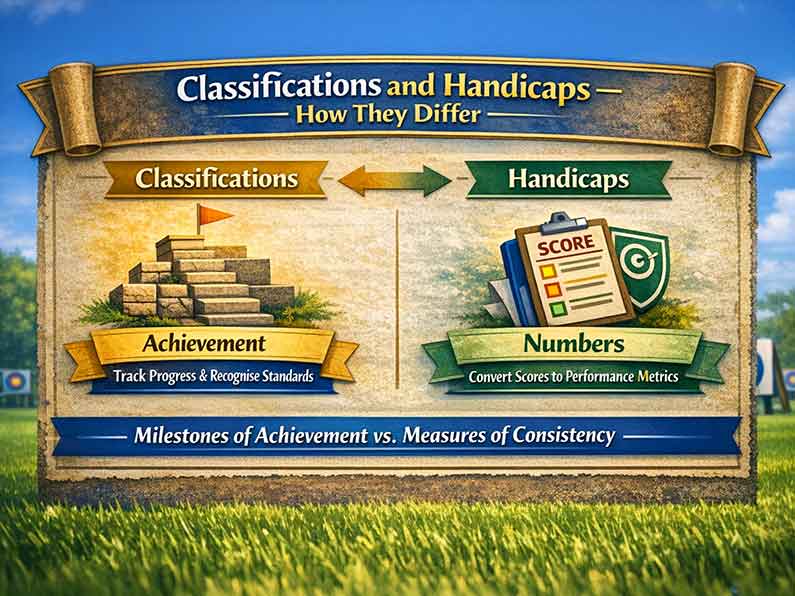
- While handicaps reflect accuracy and consistency, classifications reward achieving set score thresholds over a defined number of arrows.
Common Misunderstandings
Classifications are not handicaps
Although often mentioned together, classifications and handicaps serve different purposes.
Classifications are discrete achievement levels earned by meeting specific score and arrow-count requirements on recognised rounds. Handicaps, by contrast, are a continuous numerical measure that changes gradually as performance improves. A classification mark that a standard has been reached; a handicap tracks how consistently that standard is being achieved.
A single score can earn a classification
Unlike handicaps, classifications can be earned from a single qualifying score, provided the required arrow count and conditions are met. This is intentional: classifications are designed to recognise achievement, not consistency over time. However, higher classifications typically require more demanding rounds or competitive conditions to ensure the standard remains meaningful.
Indoor and outdoor classifications are completely separate
Indoor and outdoor classifications operate as independent systems. They use different tables, qualifying rounds, arrow counts, and seasonal cycles. Strong performance indoors does not influence outdoor classification, and vice versa. This reflects the very different technical and environmental demands of the two disciplines.
Classifications do take age, gender, and bowstyle into account
Unlike handicaps, classification scores are adjusted using separate tables for bow style, age group, and gender. This ensures that achievement at each classification level represents a comparable standard of performance across different categories, while still recognising the distinct challenges involved.
Junior classifications are not a separate system
Junior archers do not follow a different classification structure from adults. There is a single Archery GB classification framework, with the same titles and progression through the Archer, Bowman, and Master Bowman tiers. Age-related differences are handled by adjusting qualifying scores in the published classification tables, rather than by a separate junior system. This ensures that junior classifications represent equivalent standards of achievement within their age category and allows progression to continue smoothly as an archer moves into adult age groups.
Classifications recognise achievement, not current form
A classification confirms that an archer has demonstrated the required standard at least once under recognised conditions. It does not necessarily reflect current shooting form or consistency. An archer may hold a classification even if their present scores fluctuate, which is why handicaps are often used alongside classifications to provide a fuller picture.
Further Information and Official Resources
Archery GB – Classification Tables and Rules
The official source for all Archery GB outdoor and indoor target classification tables. These define qualifying scores, arrow counts, recognised rounds, and age-group requirements and should always be treated as the authoritative reference.
Archery Calculator
An independent online reference and calculator site. While primarily focused on handicaps, it provides helpful context around recognised rounds and scoring systems used by Archery GB.
Archery Geekery
A technical blog and reference site offering deeper discussion of Archery GB scoring frameworks, including how classifications and handicaps are applied in practice.
Northern Counties Archery Society
The official administrators of Clout Archery Classifications.
Pros
- Clear Milestones and Recognition: Provides visible, formal achievements that mark progression through the sport.
- Simple Achievement-Based System: A classification is earned by meeting a defined standard, making it easy to understand.
- Motivates Goal Setting: Archers can work toward specific, published targets rather than abstract measures.
- Supports Fair Grouping: Allows clubs and competitions to group archers by broadly similar ability.
- Works Well at Club Level: Straightforward for Records Officers to administer and explain.
- Independent Indoor and Outdoor Pathways: Recognises the different skills required in each discipline.
Cons
- Does Not Track Gradual Improvement: Progress between classifications may not be visible for long periods.
- Single Scores Can Be Misleading: One good score can earn a classification even if consistency is not yet established.
- Seasonal Expiry: Classifications must be re-earned each season, which can surprise newer archers.
- Dependent on Specific Rounds: Only qualifying rounds and arrow counts contribute.
- High-Level Awards Are Restrictive: Master Bowman tiers require Record Status competitions, limiting opportunities.
From Classifications to Handicaps
The Archery GB classification system provides clear, nationally recognised milestones that acknowledge achievement and progression. By meeting defined score and arrow-count requirements, archers demonstrate that they have reached a specific standard under recognised conditions. Classifications answer the question: what level have I achieved?
What classifications do not do is track performance in fine detail over time. They confirm that a standard has been met, but they do not show how consistently that standard is being achieved or how performance fluctuates between shoots.
That role is fulfilled by the Archery GB handicap system. Handicaps provide a continuous numerical measure of performance and consistency, allowing archers to compare scores across different rounds and track gradual improvement throughout a season.
Together, classifications and handicaps form a complete framework for understanding performance and development in archery. Classifications recognise achievement, while handicaps measure consistency and progression. To explore how performance is tracked numerically and how fair competition across abilities is enabled.